

How to Tell Quality Graphic Tee Fabric Before You Buy
Last Updated: November 10, 2026
Quick Summary
To tell quality graphic tee fabric, check the fiber content, fabric weight and cotton type. Stated as a percentage, weight in oz/yd² or GSM gives a reliable first read, and terms like ring-spun or combed cotton signal better yarn. Then feel the fabric for smooth, even texture and hold it to light to spot thin patches.
- Look for a clearly stated fiber content, such as 100% cotton.
- Midweight tees around 5 to 6 oz suit most everyday wear.
- Ring-spun and combed cotton are finer and smoother than standard cotton.
- Hold the shirt to light to reveal thin or sheer patches.
- Wash a tee once and measure to check for shrinkage.
Table of Contents
- Why Fabric Quality Decides How Long a Graphic Tee Lasts
- Fabric Weight and GSM: What the Numbers Actually Tell You
- Cotton Types: Ring-Spun, Combed, and Blends
- Knit Construction, Hand Feel, and Breathability
- A Practical Fabric Inspection Checklist for In-Store and Online Shopping
- How to Tell If Clothing Is Good Quality Online
- Testing for Shrinkage, Pilling, Colorfastness, and Print Durability
- Fabric Quality Chart: Matching Weight and Construction to Use
- Choosing Your Next Graphic Tee at RealCoolSportswear
- Frequently Asked Questions
Why Fabric Quality Decides How Long a Graphic Tee Lasts
Graphic tee fabric is the first thing that determines whether a shirt survives its tenth wash or ends up faded and pilled in a drawer. The shopper who knows what to look for can judge fabric before ever paying for it. This guide from RealCoolSportswear walks through the signs that separate durable graphic tee fabric from the thin, shapeless kind.
Fabric quality matters more on a graphic tee than on a plain one. The print sits on the fabric surface, so a loose knit, a thin cotton or a poor finish shows up fast. Cracking, fading and distortion usually start where the fabric is weakest, not where the design was applied.
The quality of the fabric decides how the shirt ages. A tightly knit cotton holds its shape, resists stretching at the neckline and gives screen-printed ink a stable surface to bond to.
A common mistake is judging a tee only by its design. A striking print can hide thin fabric in a photo, and the difference only becomes obvious after several washes. Checking the fabric first saves money and disappointment.
Fabric Weight and GSM: What the Numbers Actually Tell You
Fabric weight is the most cited spec for graphic tees, and it is also the most misunderstood. In the United States, tee weight is usually listed in ounces per square yard (oz/yd²), while many international brands list grams per square meter (GSM). A heavier fabric is not automatically a better fabric, but weight gives you a reliable first read on how much material is in the shirt.
Lightweight jersey, roughly in the 3 to 4.5 oz range, drapes easily and breathes well. Midweight fabric, around 5 to 6 oz, balances structure and comfort. Heavyweight fabric, above roughly 6.5 oz, feels substantial and holds a boxy shape.
Weight tells you how much fabric is present. It does not tell you how well that fabric is made. Two shirts can weigh the same and feel very different, because yarn quality, knit tightness and finishing all change the result.
Ounces per Square Yard and How to Convert
To convert between the two systems, use these approximations:
- 1 oz/yd² is about 34 GSM
- 5 oz/yd² is about 170 GSM
- 6 oz/yd² is about 203 GSM
If a listing gives only one number, multiply GSM by 0.0295 to get oz/yd², or divide oz/yd² by 0.0295 to get GSM. The midweight tee listed at 5.3 oz falls near 180 GSM, which is a solid everyday weight. Use the number as a starting point, then check the feel and construction before deciding.
Cotton Types: Ring-Spun, Combed, and Blends
The type of cotton matters as much as the weight. Ring-spun cotton is spun with a process that twists fibers into a finer, smoother yarn. Combed cotton goes a step further by removing short fibers before spinning.
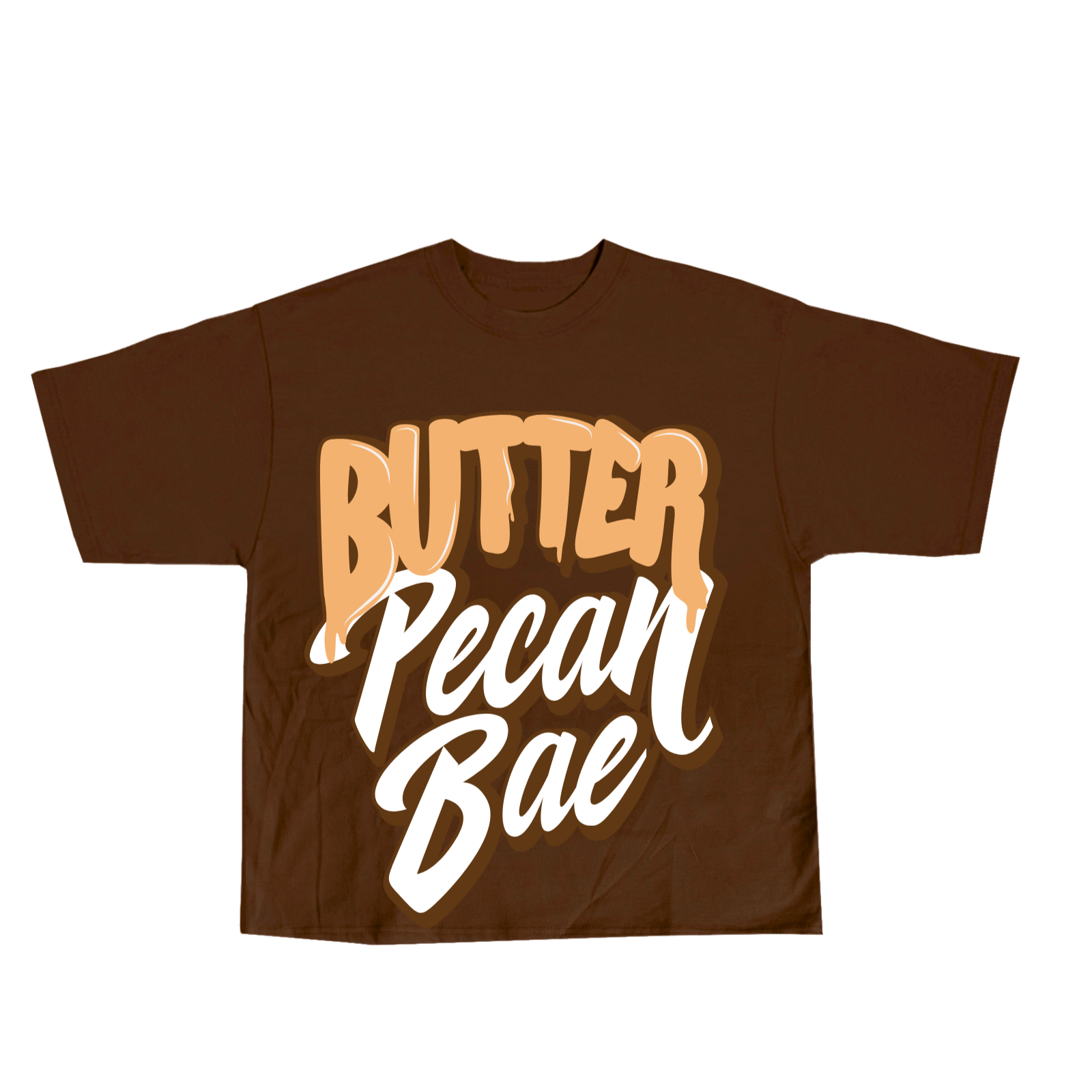
The Butter Pecan Bae T Shirt is crafted with soft ring-spun cotton. Shoppers comparing cotton construction can start with that product and then judge other tees against it.
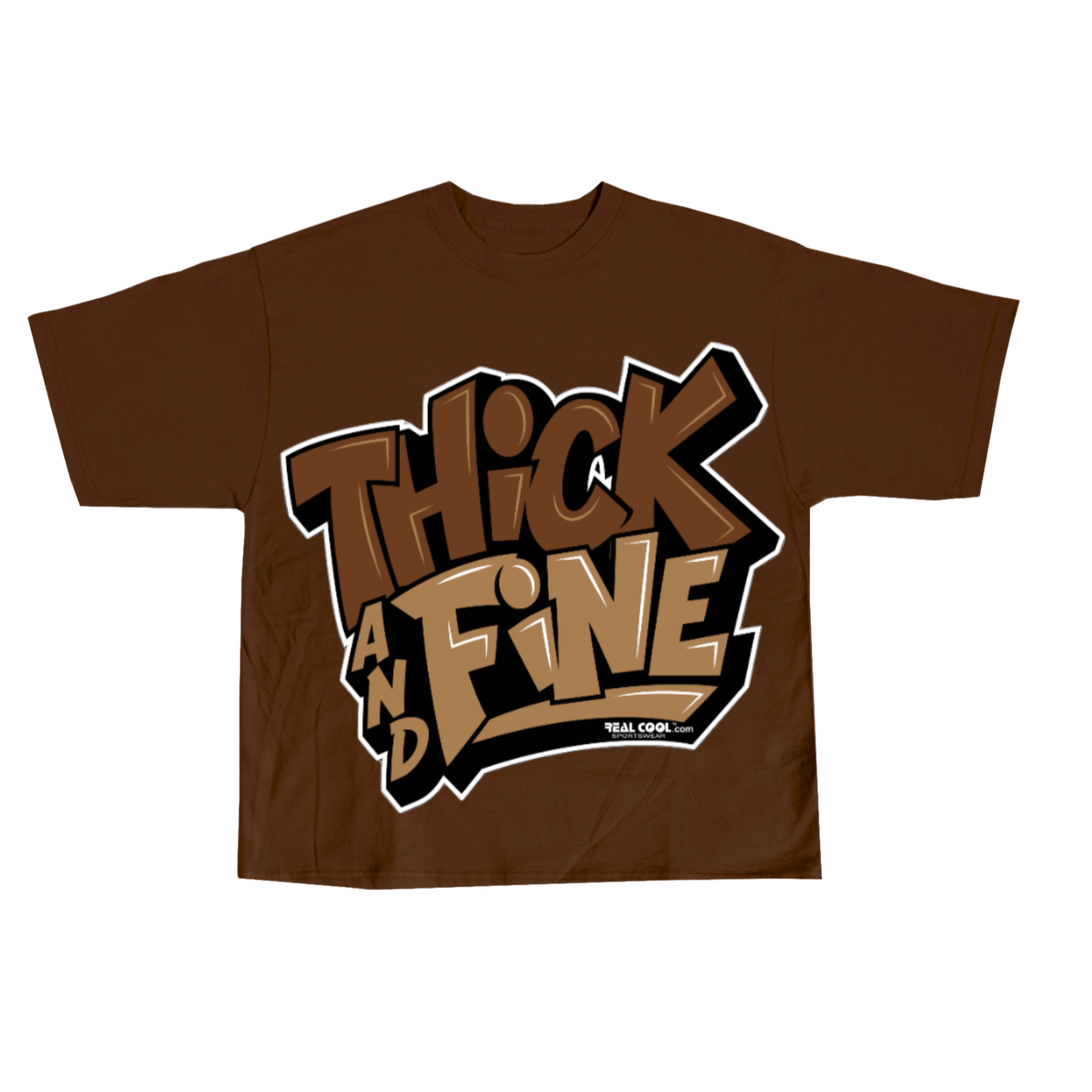
Cotton blends, usually cotton mixed with polyester, add stretch, resist wrinkling and dry faster. Shoppers who want a soft, quality cotton construction they can buy can look at the Thick & Fine T Shirt. Check the fiber content on the label or listing, and be cautious of tees that do not state it at all.
Also look at the fabric description. Terms like "100% cotton," "combed," or "ring-spun" are specific, while vague phrases like "premium blend" tell you little. Specific claims are easier to verify.
Knit Construction, Hand Feel, and Breathability
Most graphic tees use a single jersey knit, which is a plain stitch that stretches in the width direction. The tightness of that knit controls how dense the fabric feels and how well it holds print detail. A tighter knit resists snagging and sheerness; a looser knit breathes more but can stretch out of shape.
Hand feel is the quickest test you can do in person. Rub the fabric between your fingers. Smooth, consistent texture without rough spots usually signals good yarn and finishing. Stiff, scratchy fabric may have been over-treated or made from lower-grade fiber. Soft is not always better, though: a very soft, thin fabric can pill and lose shape quickly.
Breathability depends on weight, knit and fiber together. Lightweight cotton breathes most, midweight cotton balances breathability with structure, and heavyweight fabric holds heat. Pick the weight that fits your climate and how you plan to wear the shirt.
A Practical Fabric Inspection Checklist for In-Store and Online Shopping
Use this checklist before you buy, whether you are holding the shirt or reading a listing:
- Fiber content is stated clearly (for example, 100% cotton)
- Weight is given in oz/yd² or GSM
- Cotton type is named (ring-spun or combed) if quality is claimed
- Fabric feels smooth and even, with no rough or thin patches
- Knit looks tight, with no visible gaps when stretched lightly
- Neckline and seams look reinforced, not puckered or loose
- Color looks even, without sheer areas when held to light
- Return policy covers fit and fabric issues
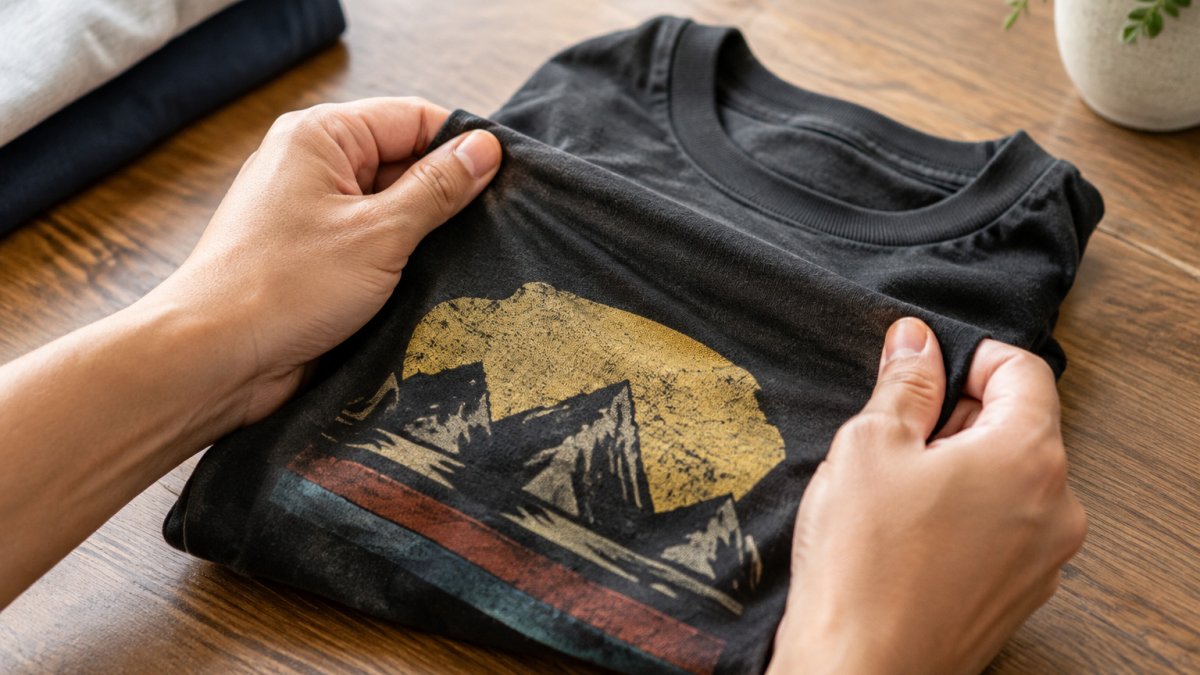
In store, hold the tee up to a window or lamp. Light passing through thin patches reveals weak areas. Stretch the neckline gently and see whether it snaps back. Look at the stitching at the shoulder seams and hem.
How to Tell If Clothing Is Good Quality Online
When you cannot touch a shirt, the listing becomes your only evidence, so read it the way you would read a spec sheet. A complete listing gives you enough to compare two tees; an incomplete one gives you a reason to ask questions before you buy.
Start with the specifications. A strong listing states the fiber content as a percentage (for example, 100% cotton or 60% cotton and 40% polyester), the fabric weight in oz/yd² or GSM, and the cotton type if quality is claimed, such as ring-spun or combed. It should also list the knit, the fit and the care instructions. If any of these are missing, the omission is information in itself.
Next, decode the vague phrases. Words like "premium," "luxury," "soft" and "heavyweight" describe how the seller wants you to feel, not what the fabric is. Treat them as marketing until a number or named construction backs them up. "Heavyweight" means little without a weight figure, and "premium blend" tells you nothing about the fiber ratio. Specific terms such as "single jersey," "loopback" or "ring-spun cotton" are easier to verify and to compare.
Compare the listing against the photographs. A close-up of the fabric weave, taken in natural light, shows the knit density better than a studio shot on a mannequin. Look for images that show the back of the shirt and the neckline tag. If the seller offers only a single styled photo, that is a reason to look for more evidence elsewhere.
Read reviews with a filter. Comments written after several washes are more useful than first-impression reviews, because shrinkage, pilling and print cracking usually appear later. Look for reviews that mention the same sizing and fabric details you care about, and note whether reviewers mention the same problem more than once.
Ask the seller questions that a listing should answer. Useful ones include: What is the exact fiber content? What is the weight in oz/yd² or GSM? Is the fabric pre-shrunk, and what shrinkage should I expect? Which print method is used? What is the return window if the fabric does not perform after washing? A seller who answers these directly is usually easier to trust than one who replies only with general praise.
Finally, check the return policy before you order. Fabric problems often show up only after the first wash, so a return window that covers only obvious defects may not protect you. A fair policy that allows returns or exchanges for fit and material concerns gives you room to test the shirt properly.
Testing for Shrinkage, Pilling, Colorfastness, and Print Durability
Laboratory standards exist for each of these properties, and the home versions below borrow their logic. They will not produce certified numbers, but they give you a repeatable way to compare two shirts instead of relying on how the fabric feels in your hand.
Before testing, mark the shirt. Sew or pin a small tag, or use a fabric marker, to note the original measurements: chest width, body length and sleeve length, each taken flat at the same points. Measure at least three times and use the average. Record the results on paper so you can compare them after each wash.
Shrinkage: Industry testing typically washes a garment through standard cycles and compares the dimensional change against the original measurements, expressed as a percentage. You can approximate this at home. Wash the tee once in cold water on a gentle cycle, then dry it flat or on a low setting, and measure again. Calculate the change by subtracting the new measurement from the original and dividing by the original. A change of a few percent on the first wash is common for cotton; a larger change suggests the fabric was not pre-shrunk, and you should expect the fit to tighten. Compare the pattern across both length and width, because uneven shrinkage often causes twisting at the hem.
Pilling: Formal pilling tests rub the fabric against a standard abradant for a set number of cycles and then rate the surface on a visual scale. At home, fold a small section of the fabric and rub it firmly against itself or a piece of denim for about 20 seconds, then check for small fiber balls. Repeat on a second section of the same shirt to confirm the result. Pilling that appears after light rubbing points to short staple fibers and loose yarn; pilling that appears only after heavy rubbing usually reflects a more stable surface. Keep in mind that a shirt with minor pilling after one test is not automatically poor, because finishing and fiber length can change how quickly fuzz forms.
Colorfastness: Standard colorfastness tests expose dyed fabric to water, washing and rubbing, then check how much color transfers to a white adjacent fabric. A practical version is to dampen a white cotton cloth, rub it across a hidden seam allowance or the inside hem of the shirt about 20 times, and check the cloth for color. Visible dye on the white cloth indicates the dye may bleed in the wash. Then wash the shirt once separately, cold water and inside out, and inspect the rinse water and the fabric for fading. Dark and saturated colors bleed more often than neutrals, so this step matters most for black, navy and red tees.
Print durability: Print tests look at how the design holds up under stretch, abrasion and washing. Stretch the printed area in several directions and look for cracking lines at the folds. Rub the print with a fingertip and check for lifting or a sticky, tacky surface. After the first wash, compare the print to a photograph taken before washing; rough edges, cracks or ink that has moved are early signs of a weak bond between ink and fabric. Screen prints with a thicker, flexible ink layer usually show less cracking than thin prints, while direct-to-garment prints depend heavily on the quality of the pretreatment and curing.
Watch out: A single home test is not a guarantee, so run the checks on more than one area and repeat the wash test before deciding a shirt is durable.
Use the measurements, the rub results and the wash results together. A shirt that shrinks evenly, resists pilling and holds its print through one cold wash is a reasonable bet for long-term wear.
Fabric Quality Chart: Matching Weight and Construction to Use
Choose fabric based on how you plan to wear the shirt:
| Use | Suggested Weight | Construction to Look For | Notes |
|---|---|---|---|
| Warm-weather everyday wear | Lightweight (about 3 to 4.5 oz) | Tight combed cotton | Breathes well but check opacity |
| Everyday graphic tee | Midweight (about 5 to 6 oz) | Ring-spun or combed 100% cotton | Best balance for most shoppers |
| Streetwear and layering | Heavyweight (6.5 oz and up) | Dense single jersey | Holds shape, feels warmer |
| Active or stretch wear | Light to midweight blend | Cotton-polyester blend | Dries faster, less natural feel |
The midweight Butter Pecan Bae T Shirt is made from 100% ethically sourced U.S. cotton with a 5.3 oz fabric weight. The Dark n Lovely T Shirt and the Premium Chocolate T Shirt are other midweight options shoppers may compare.
Choosing Your Next Graphic Tee at RealCoolSportswear
Quality fabric is the foundation, and the rest of the shirt has to support it. RealCoolSportswear offers graphic tees that celebrate culture, self-love and identity. If you want to see the fabric principles in action, browse the graphic tees at [Collection: Real Cool Tees | realcoolsportswear.com] and compare their listings.
Start with the checklist, match the weight to your climate, and look for clear fiber content. Then pick a design that speaks to you. A tee that feels good, holds its shape and keeps its print is one you will reach for again.
Frequently Asked Questions
How can you tell if a graphic T-shirt is high quality?
Check the fabric weight first. Midweight cotton around 5.0 to 6.0 ounces per square yard usually holds its shape and resists sheerness, while very light tees often thin out after repeated washing. Next, look at the cotton type, since ring-spun cotton feels softer and pills less than open-end cotton. Finally, examine the stitching and print edges, which should be clean and flat. Compare these details against the product listing rather than relying on the design alone.
What fabric is used for graphic tees?
Most graphic tees use 100% cotton or a cotton-polyester blend in a jersey knit. Pure cotton breathes well and takes screen printing and direct-to-garment printing reliably, while blends often resist shrinkage and wrinkles. Our Butter Pecan Bae T Shirt, for example, is made from 100% ethically sourced U.S. cotton with a 5.3 oz midweight fabric, so the material is stated plainly on the listing.
Does fabric weight determine T-shirt quality?
Weight is a strong indicator of durability and opacity, but it does not measure quality on its own. A heavy tee made from coarse, low-grade fibers can still pill and stretch out. Weight tells you how much fabric is in the shirt; construction and fiber quality tell you how well that fabric performs. Use weight together with cotton type and knit tightness to judge a shirt fairly.
How to tell if fabric is high quality?
Hold the fabric up to a light source. Quality fabric looks even with no thin spots, and the knit should be tight enough that you cannot see through it. Stretch the fabric gently in both directions; it should recover its shape. Feel the surface for consistent softness, since rough spots often signal lower-grade yarn or heavy finishing chemicals that wear off quickly.
How can you tell whether a graphic tee will shrink or fade?
Look for pre-shrunk cotton and check the label for care instructions, since pre-shrinking reduces later size change. Fading depends on dye quality and print type; screen-printed designs with thicker ink layers typically hold color longer than thin prints. You can test a shirt at home by washing one sample inside out in cold water and comparing its measurements and color before and after. Repeat this on a second wash to see the trend.
What makes a graphic T-shirt print last longer?
Print longevity depends on the ink, the curing process, and the fabric underneath. Smooth, tightly knit cotton holds ink better than loose or heavily textured fabric. Wash inside out in cold water, skip the dryer when possible, and avoid bleach. Prints that feel thick and flexible rather than stiff and plastic-like usually last more wash cycles before cracking.
What should you check when buying a graphic tee online?
Start with the listed fabric content and weight, then look for measurements such as chest width and length in the size chart. Read product photos for fabric texture and print detail, and check whether the seller describes construction like taped shoulders or no side seams. Clear, specific details on the listing are a good sign that the brand is confident in what it sells.
How can you tell if T-shirt fabric is high quality without touching it?
Use the product listing as your inspection tool. Look for the fabric weight in ounces per square yard or GSM, the exact cotton type, and whether the knit is described as jersey or ring-spun. Zoomed-in photos showing the weave and print edges also reveal a lot. If a listing gives only vague terms like premium or soft without specifications, treat that as a reason to ask questions before ordering.
